


South Australians are being asked to check how they think and speak about ageing and older people and are reminded that ageist attitudes can lead to elder abuse.
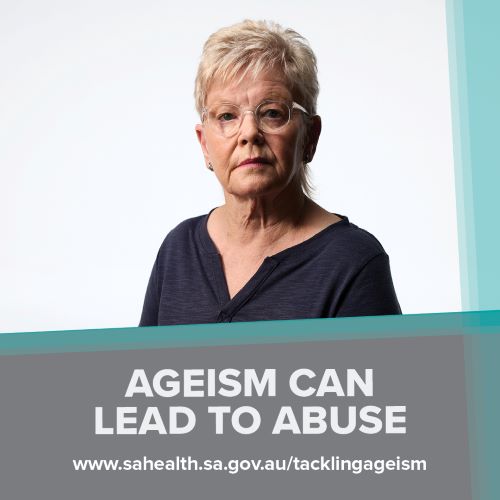
The annual statewide Elder Abuse Prevention community awareness campaign highlights that older people have the right to make their own decisions, be safe and to be treated with dignity and respect.
But ageist attitudes in our society lead to exclusion and underestimation of older people, making them feel invisible, deterring them from staying in the workforce, making it harder to live and age well, and negatively affecting the provision of services and care.
Older people may be prevented from making their own decisions about their life, how and where they live, who they spend time with, and how they deal with their finances.
Older South Australians who provide feedback through Office for Ageing Well’s regular Statewide Conversations, continue to express frustration about their portrayal by media and in popular culture. Stereotyping older people as being unable to drive safely and using language such as ‘elderly’ reinforce negative community beliefs and attitudes towards older people.
Community members can check their own attitudes and beliefs about older people, and discover ways to challenge ageism, using the Age Positive Communication Toolkit and Bystander Action for Ageing Well Training at: www.sahealth.sa.gov.au/tacklingageism.
Persistent and insidious devaluing of older people can spiral into abuse or mistreatment, with the World Health Organization (WHO) estimating global prevalence of more than 15 percent.
Signs of abuse or mistreatment can be fear, sadness, and neglect. Forms of abuse include financial, psychological, physical, social, neglect, sexual and chemical – such as over or under medication.
In South Australia, Adult Safeguarding Unit data for the 2022-2023 financial year shows that it received most contacts about emotional abuse (38 percent) followed by financial abuse (20 percent).
Older women were most likely to be experiencing abuse (66 percent) and most commonly, the people alleged to be carrying out the abuse were adult sons and daughters (43 percent).
In Australia, the National Prevalence Study in 2021 reported that 1 in 6 older people experienced abuse or mistreatment in 2019-2020 and 50 percent of older people who responded to a community perception survey in South Australia said they did not feel valued in their community.
If you suspect abuse or mistreatment of an adult who may be vulnerable, you can contact the Adult Safeguarding Unit on 1800 372 310 or go to Adult Safeguarding Unit | SA Health to seek free confidential advice and support or to make a report
South Australia’s Elder Abuse Prevention awareness campaign will run across social and digital media, including YouTube; radio; and print until 28 July.
Ageism can lead to abuse. How do you treat the older people in your life?