


For many older Australians, home modifications such as grab rails, ramps and accessible bathrooms can support safer, more independent living at home. A recent study led by Professor Stacey George at Flinders University explored the broader value of these modifications using a Social Return on Investment (SROI) approach.
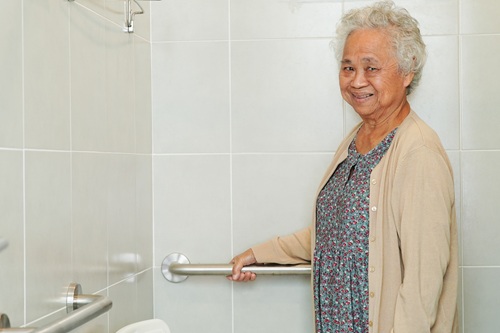
Image 1. Asian older woman patient use toilet support rail in bathroom, handrail safety grab bar. © Manassanant Pamai/iStockphoto.com. Used under license.
What is Social Return on Investment?
SROI is a method of measuring the wider social and economic value of an intervention, by considering the outcomes that matter to individuals, carers, funders and the community.
The study combined interviews with home modification users, carers and stakeholders (including occupational therapists and installers), with evidence from the literature to estimate the social value generated by six common home modification scenarios.
Financial proxies were applied to estimate the value of outcomes without a direct market price. Outcomes were weighted to reflect the proportion of individuals likely to benefit, and a benefit period aligned with the expected lifespan of the home modifications applied, at 10 years.
What did the study find?
All six home modification scenarios generated substantial social value. Depending on the type of modification, every $1 invested returned between $16.52 (for major bathroom modifications) and $566.15 (installation of rails) in social value over a 10-year period.
Participants reported that the home modifications improved their safety, confidence and independence, reduced fear of falling, made it easier to complete daily activities, enhanced wellbeing, and reduced reliance on formal and informal care. Carers also benefited through reduced physical and emotional load.
What needs to change?
The researchers recommend incorporating SROI evidence into funding and policy decisions, particularly when assessing long-term investment and funding caps.
Further research is needed to better understand the impact of home modifications on formal and informal care requirements, as well as strategies to improve access for older people who rent or live in social housing.
Additionally, the findings support greater consideration of universal design principles to create more age-friendly and accessible housing from the outset.
Overall, the study demonstrates that home modifications are more than home improvements. They are an investment in safety, independence, dignity and wellbeing, helping older people remain connected to their homes and communities for longer.
For further information about this project, contact Professor Stacey George, Caring Futures Institute at Flinders University, Stacey.george@flinders.edu.au.
This project was supported by an Impact Research Grant for Ageing Well 2023 from Office for Ageing Well, Department of Human Services.