


Safeguarding is important for the health, wellbeing and safety of ourselves and others.
But what is it and why is it so important?
Safeguarding can be described as “the action that a person, community or organisation takes to promote and protect the health, wellbeing and human rights of a person to live free from mistreatment” (Office for Ageing Well).
At its core, safeguarding is about upholding people’s rights. Each of us has a role to play in upholding rights and safeguarding against the mistreatment of ourselves and others.
We can safeguard ourselves:
- through the positive beliefs we hold about ourselves and others.
- by maintaining our health and independence.
- by knowing what support is available if we need help.
- by using self-advocacy tools, such as Advance Care Directive, Enduring Power of Attorney and Will.
- by maintaining social connections.
Neighbours, friends, family, the community groups we belong to and the places we go to regularly in our neighbourhood also provide safeguarding. It can be:
- a ride to an appointment.
- a listening ear.
- support with problem solving.
- help to learn a new skill.
- a place for connecting socially.
There are many organisations that provide services, supports and interventions to prevent mistreatment, and to restore people’s right to safety, dignity and respect.
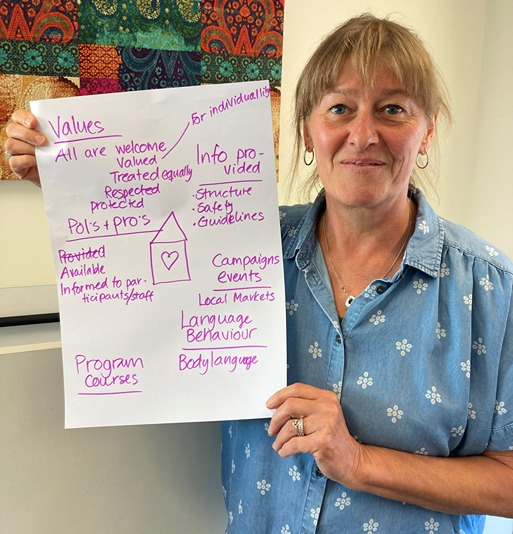
Safeguarding was on the agenda at a recent collaboration between Community Centres SA and the Adult Safeguarding Unit, Office for Ageing Well that involved a series of workshops with staff and volunteers from 11 community centres in the City of Onkaparinga.
The workshops aimed to:
- discuss the link between safeguarding, human rights and discrimination –specifically ageism and ableism - and how this can lead to mistreatment.
- raise awareness and understanding of mistreatment in the community.
- discuss the range of safeguarding actions available.
Community centres, like many other community-led organisations in South Australia, can play an important safeguarding role in their communities, as:
- inclusive and safe spaces for social connection.
- a place for support.
- a link to other services.
Scott Dutschke, Acting Chief Executive Officer at Community Centres SA explains, “The workshops have been co-designed by CCSA, Office for Ageing Well and the Adult Safeguarding Unit, community centres and other stakeholders, to provide additional information and resources to support staff and volunteers in their roles.”
Feedback from the workshops has been very positive as organisations explore how they currently uphold and safeguard human rights, as well as identify ways to strengthen their safeguarding culture.
Image caption: Noonie, Volunteer Program Facilitator, exploring the safeguarding culture at her local community centre as part of the Safeguarding Rights workshop.
This project is supported by Office for Ageing Well, SA Health.